Monday, November 24, 2014

Homework for Tuesday, November 25

Read: Document Set: The French Revolution

  • Documents V-X

Answer for Each Document:
1.  What type of document is this?
2.  What is the date of the document?
3.  Who is the author and what is their significance?
4.  Who do you believe this document was written for?
5.  What is the main idea of this document?

Friday, November 21, 2014

Christmas 1914


This advertisement dramatizes an actual event in history - the spontaneous truce between the Germans and the British on Christmas Day 1914.  For 24-48 hours, the guns fell silent, and the enemy armies filling the trenches of the Western Front exchanged names, food, gifts from home, and celebrated Christmas together.  The war resumed quickly, but what an incredible reminder of humanity in the midst of horrific devastation.

Tuesday, November 18, 2014

Homework for Thursday, November 20


Read:  Document Set: French Revolution

  • Documents I-IV
Answer for Each Document:
1.  What type of document is this?
2.  What is the date of the document?
3.  Who is the author and what is their significance?
4.  Who do you believe this document was written for?
5.  What is the main idea of this document?


Wednesday, October 29, 2014

Homework for Thursday, October 30

Read pages 476-484 in the textbook.

Answer the following questions:

1. What is the difference between high society and popular culture?

2. What were some of the trends that appeared in "high culture" of the 18th century?

  • music
  • literature
  • medicine
  • art
3. What were some of the trends in popular culture?

4.  How do these trends show the widening of the gap between the rich and the poor?

Thursday, October 16, 2014

Homework for Friday, October 17

Everyone: Make a timeline of the English Civil War (James I through William I)

Readings about Peter the Great and Louis XIV
These documents are all on the same webpage, but you only have to read the one you are assigned below.

Stephen: Bishop Burnet, Peter the Great 1698
Noah: Von Korb, Diary 1698-99
Jack: General Alexander Gordon, History of Peter the Great 1718
Neel: Jean Rousset de Missy, Life of Peter the Great, c. 1730
Lauren: Duc de Saint-Simon: The Court of Louis XIV, "The Court"
Victor: Duc de Saint-Simon: The Court of Louis XIV, "Life at Versailles"
*As you read these documents, think about what they say about the absolutism of each monarch.

Don't Forget!  Quiz tomorrow!

Tuesday, October 14, 2014

Homework for Thursday, October 16

Absolutist Monarch Bios

Find the following information about your assigned absolute monarch:


  • Dates (birth, death, years of rule)
  • King of __________ (country)
  • Major accomplishments
    • political,
    • military,
    • economic,
    • etc.
  • Wars
    • years
    • who were they against?
    • who won?
  • On a scale of 1 to 10, how absolutist were they?  (1 being the least, 10 the most) - be prepared to defend your answer :)
  • One interesting fact

Stephen - Peter the Great
Jack - Louis XIV
Neel - Charles VI of Austria
Noah - Philip II of Spain
Victor - Frederick William the Great Elector
Lauren - Charles XII of Sweden

Type up your answers and bring them to class on Thursday.  You may use your notes, the textbook, or the internet to complete this assignment.

Monday, October 13, 2014

Homework for Tuesday, October 14

Watch:
Crash Course History: Venice and the Ottoman Empire


Crash Course History: Russia


Answer:
1. What was John Green's main argument in each video?
2. How does he support his argument?  Provide examples.
3. Were  you convinced?  Why or why not?
4. What was one thing you found most interesting from each video?
5. What is one question you still have after watching these videos?

Friday, October 10, 2014

Homework for Monday, October 13

Read: pages from textbook (I emailed them to you)

Answer: 
1. Explain how Poland and the Dutch Republic resisted absolutism.  Why did absolutism fail in these two places?

2. How did the culture of the 17th century reflect the political, religious and social contexts in which it developed? Be sure to provide specific examples from art, literature, and theater.

Also...
- test corrections (due Monday)
- extra credit (optional, due by Wednesday)

Fountains and Reflecting Pool at Versailles

Thursday, September 25, 2014

Map Quiz (9/29)

Countries
England
France
Ireland
Scotland
Germany
http://www.youreuropemap.com/
Austria
Switzerland
Netherlands
Belgium
Spain
Portugal
Italy
Russia
Poland
Sweden
Norway
Finland
Denmark
Turkey

Capitals
Rome
London
Paris
Madrid
Berlin
Amsterdam

Waters
Atlantic Ocean
North Sea
Baltic Sea
Mediterranean Sea
Black Sea

Homework for Monday, September 29

  
Read the Accounts of Louis XIV.

Answer:
Saint-Simon's Portrait of Louis XIV
What positive attributes does Saint-Simon use to describe Louis XIV?
What negative attributes does he describe?
Do you think he respected and liked Louis XIV?
How does this description compare to the description of a true nobleman by Castiglione? Provide two specific examples. 
Madame de Sevigne's Portrait of Louis and his Court
What happens in this account?
What does this story tell us about the pressures felt by the nobility?
What does this story tell us about the lives of the nobles during the reign of Louis XIV?
**Plan to turn this homework in for a grade.**

Monday, September 22, 2014

Homework for Tuesday, September 23


Ignatius of Loyola - founder of the Jesuits


Read: excerpt from Spiritual Exercises

Answer:
Based on the rules included in this text, what did the Jesuits hold as important characteristics of their followers?  What were Jesuits supposed to be like or do?

How were the teachings of Ignatius different from those of the Protestant reformers (Luther, Calvin, etc.)?  Provide SPECIFIC examples.


Jesuit symbol

Friday, September 19, 2014

Ahoy, matey!

Happy Talk Like A Pirate Day!


Click here for rules from an actual pirate code!

___________________________________________

What is a pirate's favorite movie?
Booty and the Beast
____________________________________________ 

Women could be pirates, too!  Click here to read about famous female pirates who roamed the seas.

Sunday, September 14, 2014

Terms & IDs
Pope Alexander VI
Pope Callixtus III
simony
pluralism
absenteeism
sale of indulgences
nepotism
John Wycliffe
John Hus
Martin Luther
95 Theses
Johann Tetzel
Pope Leo X
"sola fide"
"sola Scriptura"
"priesthood of all believers"
Diet of Worms
Johann Eck
Confessions of Augsburg
Peasants' War (or German Peasants' Revolt)
Elector Frederick III
Peace of Augsburg
League of Schmalkalden

Wednesday, September 10, 2014

Homework for Thursday, September 11


Read
Martin Luther's 95 Theses

Respond
Pick 5 of the 95 Theses and re-write them in your own words. (Type and email them to me, please.)

(rheiser@shannonforest.com)


Tuesday, September 9, 2014

History Today Article & Questions

Read Were the Borgias Really So Bad?

Respond
What is the main argument of the article?
How does this argument compare to the "traditional" account of the Borgia popes?
Which account are you more inclined to believe?  Why?

Monday, September 8, 2014

Homework for Tuesday, September 9

Watch
Crash Course History: The Columbian Exchange


Answer
What is John Greene's argument?
Provide examples of the evidence he uses to support his argument?
Do you find his argument persuasive?  Why or why not?


Terms & IDs
God, gold, glory
Mercantor
astrolabe
Prince Henry the Navigator
Bartholomew Dias
Vasco da Gama
Amerigo Vespucci
Christopher Columbus
Bartholomew de las Casas
Treaty of Tordesillas
Vasco Nunez de Balboa
Ferdinand Magellan
Hernando Cortes
Francisco Pizarro
encomienda system
mestizos
creoles
Dutch East Indian Company
Jacques Cartier
John Cabot
Slave Trade
Columbian Exchange

Friday, September 5, 2014

Homework for Monday, September 8

Bartolome de las Casas was a Spanish, Franciscan monk who traveled with the conquistadors and witnessed the treatment of the indigenous peoples by the Spanish colonists.  He condemned their behavior in a text called A Short Account of the Destruction of the Indies which he illustrated with graphic depictions of the Spanish atrocities.

Read the following excerpt from his work and examine the images below.


What words does Bartolome de las Casas use to describe the Spaniards?  the Indians?
According to the illustrations, what types of atrocities did the Spanish commit against the Indians?
How do you think Europeans felt when they saw these illustrations and read las Casas' book?

How does this account of the Spanish exploration compare to the letter written by Columbus and the account of the meeting between Moctezuma and Cortes?


Thursday, September 4, 2014

Homework for Friday, September 5


Read: Columbus' Letter to the King and Queen of Spain, 1494

Answer: 
What does Columbus recommend for the organization of institutions (government, church, etc.) in Espanola?
How does Columbus propose the large amounts of gold in Espanola and the New World be regulated?
Based on this letter, what do you think was Columbus' motivation for the discovery and colonization of the New World?

Terms & IDs
"new monarchs"
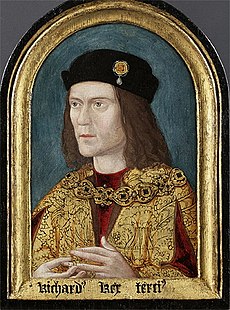
Richard III earliest surviving portrait.jpgstanding armies
Henry VII of England
Francis I of France
Louis XI of France
taille
War of the Roses
Henry VIII
Ferdinand of Aragon
Isabella of Castile
Reconquista, 1492
Spanish Inquisition
conversos
Maximilian I
Charles V of Holy Roman Empire
Hapsburg-Valois Wars


Video about the discovery of Richard III's remains: https://www.youtube.com/watch?v=Tgr94xGp1DM
Maybe not his remains...? http://www.theguardian.com/uk-news/2014/mar/27/richard-iii-remains-leicester-doubt-car-park-academics
Reactions?

Friday, August 29, 2014

Test #1 Overview

Test Structure:
Multiple Choice Section
Essay Section

Things to Study:
NOTES
Terms/IDs
Readings
Powerpoint Slides

Things to Know:
Later Middle Ages
  • Babylonian Captivity
  • Great Schism
  • Hundred Years' War
  • Black Plague
Renaissance
  • Economy, Society, and Politics of Renaissance Italy
  • Italian Humanism
  • Italian Renaissance Art
  • Northern/Christian Humanism
  • Northern Renaissance Art
Think about...
  • Compare/contrast the Northern and Italian Renaissance.
  • How did the context of 14th-century Italy and Northern Europe create an environment that would allow the Renaissance to occur when and where it did?
  • Was the Renaissance truly a "rebirth," a "renaissance"?


Thursday, August 28, 2014

Terms & IDs

Northern Renaissance Art
Claus Sluter
Jan van Eyck
Francis I
Albrecht Durer
aerial perspective
Arnolfini Wedding
Chateau Fontainbleau


**Also, remember that tomorrow is the last day to turn in or purchase your Coupon Books.

Wednesday, August 27, 2014

Erasmus & Satire


Erasmus' In Praise of Folly stands as the epitome of cultivated common sense.  Here are some examples of the biting satire that he directed towards different groups in society:
[Merchants:] The merchants are the biggest fool of all. They carry on the most sordid business and by the most corrupt methods. Whenever it is necessary, they will lie, perjure themselves, steal, cheat, and mislead the public. Nevertheless, they are highly respected because of their money. There is no lack of flattering friars to kowtow to them, and call them Right Honorable in public. The motive of the friars is clear: they are after some of the loot.
[Philosophers:] The philosophers . . . are reverenced for their beards and the fur on their gowns. They announce that they alone are wise and that the rest of men are only passing shadows. . . . The fact that they can never explain why they constantly disagree with each other is sufficient proof that they do not know the truth about anything. They know nothing at all, yet profess to know everything. They are ignorant even of themselves, and are often too absent-minded or near-sighted to see the ditch or stone in front of them.
[Monks:] These smooth fellows simply explain that by their very filth, ignorance, boorishness, and insolence they enact the lives of the apostles for us. It is amusing to see how they do everything by rule, almost mathematically. . . . The monks of certain orders recoil in horror from money, as if it were poison, but not from wine or women.
In the comment section below, respond to this excerpt.  Which of the three sections did you find most interesting/comical/mean/true/false/etc.?  Why?

*http://oaks.nvg.org/erasmus.html

Tuesday, August 26, 2014

Terms & Identifications

Renaissance Art
Giotto
Linear Perspective
Ghiberti
Brunelleschi
Masaccio
Botticelli
Leonardo da Vinci
Michaelangelo
Pieta
Sistine Chapel
Raphael
School of Athens
Bellini
Titian
Alberti
Bramante

Northern Renaissance & Christian Humanism
vernacular literature
Scholastics
Erasmus
In Praise of Folly
Erasmus' New Testament
Sir Thomas More
Utopia

Friday, August 22, 2014

Homework for Monday, August 25


Find 5 examples of Italian Renaissance art and explain how they depict the historical context in which they were created. (Hint: think about the society, politics, and economy of Italy and about the ideas of Humanism.)

You may use bullet points.  Bring printed copies of the paintings you chose to class on Monday.

(On the website, select either Early or High Renaissance.  We will get to Northern Renaissance later.)

Thursday, August 21, 2014

Homework for Friday, August 22

Read:
The Humanists' Fascination with Antiquity - "Petrarch: The Father of Humanism" and "Leonardo Bruni: Study of Greek Literature and a Humanist Educational Program" (pgs. 3-7)

Answer:
What do historians mean by the term "Renaissance humanism"?
What made Petrarch aware that a renaissance, or rebirth, of classical learning was necessary in his time?
Why did Leonardo Bruni abandon his earlier course of studies to pursue the study of Greek literature?
What subjects made up the basic course of studies advocated by Bruni?


Terms:
Humanism
Petrarch
Leonardo Bruni
Lorenzo Valla
Isotta Nogarola of Verona
Neoplatonism
Marsilio Ficino
Hermeticism
Giovanni Pico della Mirandola
Johannes Gutenberg
vernacular literature


Monday, August 18, 2014

Homework for Tuesday, August 19

Answer: 
What was life like in Italy in the 15th century (1400s)?  Would you have wanted to live then?  Why or why not?

How did the status of the nobility change during the Renaissance and what was the effect on the political structure in Italy?

Terms:
Hanseatic League
Medici family/House of Medici
Castiglione
Isabella d'Este
Birth of Modern Diplomacy
Machiavelli
The Prince

Friday, August 15, 2014

Homework for Monday, August 18th


Answer: 
What is John Green's major question?  How does he answer it?
Provide three examples of the evidence Green uses to support his argument.

Read:
Castiglione's The Courtier
Machiavelli's The Prince
Answer the questions included with each excerpt.

Thursday, August 14, 2014

Homework for Friday, August 15


Answer: 
Compare and contrast the Black Plague and the current Ebola outbreak in Africa.  How is each epidemic spread? Are their symptoms similar or different?  What are the effects on the institutions of authority (the Church, the government, etc.)?  
What can we learn from the experiences of people during the Black Death and how can we apply those lessons to our modern problems with infectious disease?


Tuesday, August 12, 2014

Homework for Thursday, August 14

Watch:

Answer:
What question is John Green trying to answer?
What is his main argument? (How does he answer the major question?)
Explain two ways in which he supports his argument.


Read: Hundred Years' War article
Answer:
What were the causes of the Hundred Years' War?
What event(s) marked the turning point of the war?
Compare the military styles of the French and the English.
What were some of the long term effects of the Hundred Years' War?

Sunday, July 6, 2014

Baby, You're a Firework


Happy Independence Day!  The 4th of July is always one of my favorite holidays, and it's because I love fireworks.  I love the colors, the loud noise, the whole thing.

Did you know that fireworks were first created in China between 600-900 AD? (Sometimes history is a little vague on when things happened, especially if it was a long time ago before good records were kept.)  For a brief history of fireworks, check out this article on www.history.com: Fireworks' Vibrant History

Friday, June 20, 2014

Deadly Victorian Fashion

How far are you willing to go for fashion?  Throughout history, women have been willing to go to incredible lengths in order to be at the height of fashion.  Queen Elizabeth used lead-based make up, a common practice with aristocratic women, a practice that often led to lead poisoning.  In the Victorian period, women wore dresses dyed green with arsenic - fully knowing that they were endangering their lives.

MAC23_FASHION_CAROUSEL

The attached article explains even more ways that Victorian people wore dangerous clothing.  Make sure to watch the video!

http://www.macleans.ca/culture/arts/deadly-victorian-fashions/

Saturday, June 7, 2014

D-Day Then & Now: 70th Anniversary

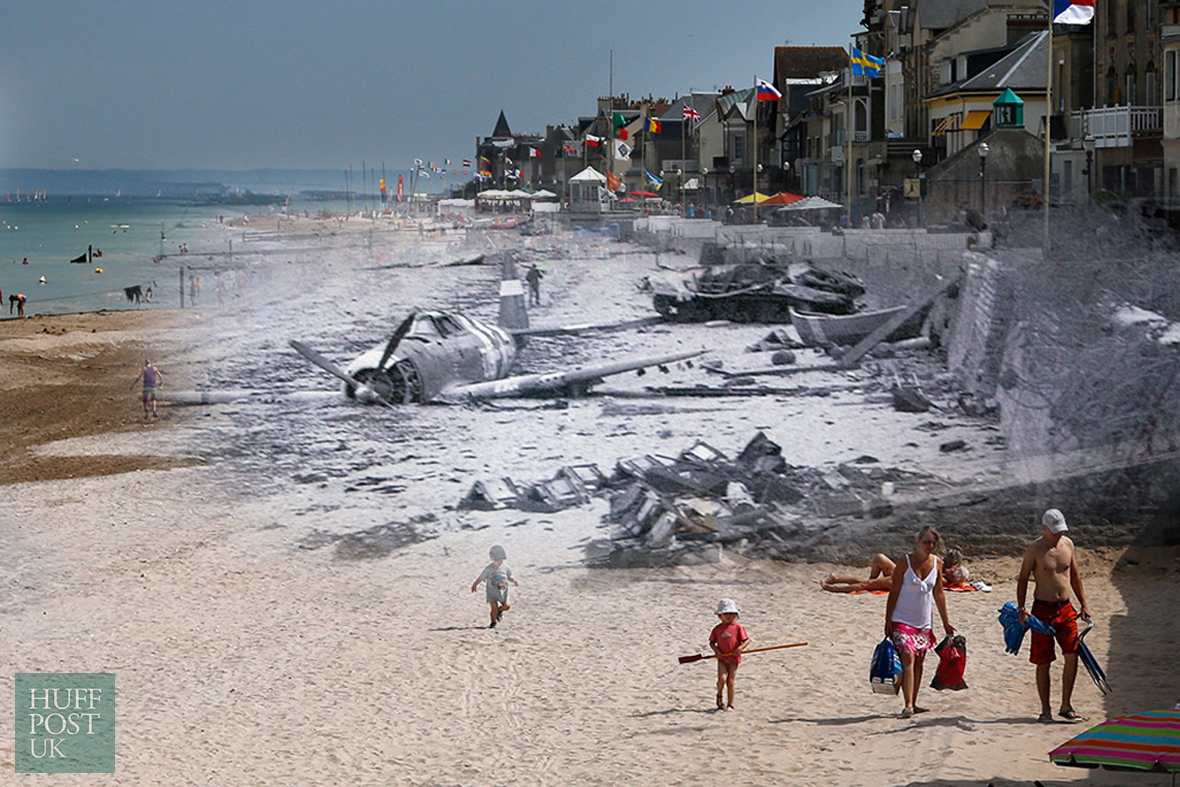
Seventy years ago the Allied Forces under the command of Dwight D. Eisenhower landed on Normandy Beaches, marking the beginning of the end of World War II.  It is easy to focus on the heroism of the troops and the ultimate victory while forgetting the horrors of the suffering and the destruction of war.  The Huffington Post put together a collection of images that counterpose modern-day scenes on photos of the invasion of Normandy Beaches on D-Day.  The startling contrast of the two scenes is a stark reminder that the freedom and leisure that we celebrate came at a cost.

D-Day Landing Sights Then and Now: 11 Striking Images that Bring the Past and Present Together


Saturday, May 31, 2014

Welcome!

Welcome to "Sketching History," a blog designed for the 2014-2015 students of AP European History at Shannon Forest Christian School.

Here are some of the features you can expect to see on this blog:
  • the course syllabus,
  • information about the AP European History Exam,
  • tips for writing history essays,
  • a timeline of European history (1340-2004) that will be added to throughout the year,
  • homework assignments,
  • outside readings (primary and secondary sources),
  • helpful resources (videos, pictures, maps, etc.),
  • Who's Who? (a collection of the influential people in European history),
  • fun facts about European history,
  • communication between teacher and students (and sometimes parents),
  • ...and much more!

You should check the blog pretty frequently - once each day wouldn't be a bad idea (let's be honest, you're on Facebook/Twitter/Instagram more often than that!).  And if you "subscribe by email," you will be automatically  notified if I post something new.  Sometimes I may ask you to respond to a quote or a question in the comments section before coming to class the next day (thus the importance of regularly checking in).

Mostly though, this is designed to be helpful for YOU, so if you have any suggestions of how to improve this website, please let me know!